You can spend 30 days applying for AI jobs and still have nothing to show a hiring manager. Or you can use those same 30 days to build proof of your skills, reach the right people, and prepare to explain your work.
This sprint is designed for working professionals and students moving from roles like QA, Salesforce, data engineering, testing, and technical support into AI engineering or AI-adjacent positions. You do not need to do everything perfectly; you need a repeatable plan you can follow alongside your existing responsibilities.
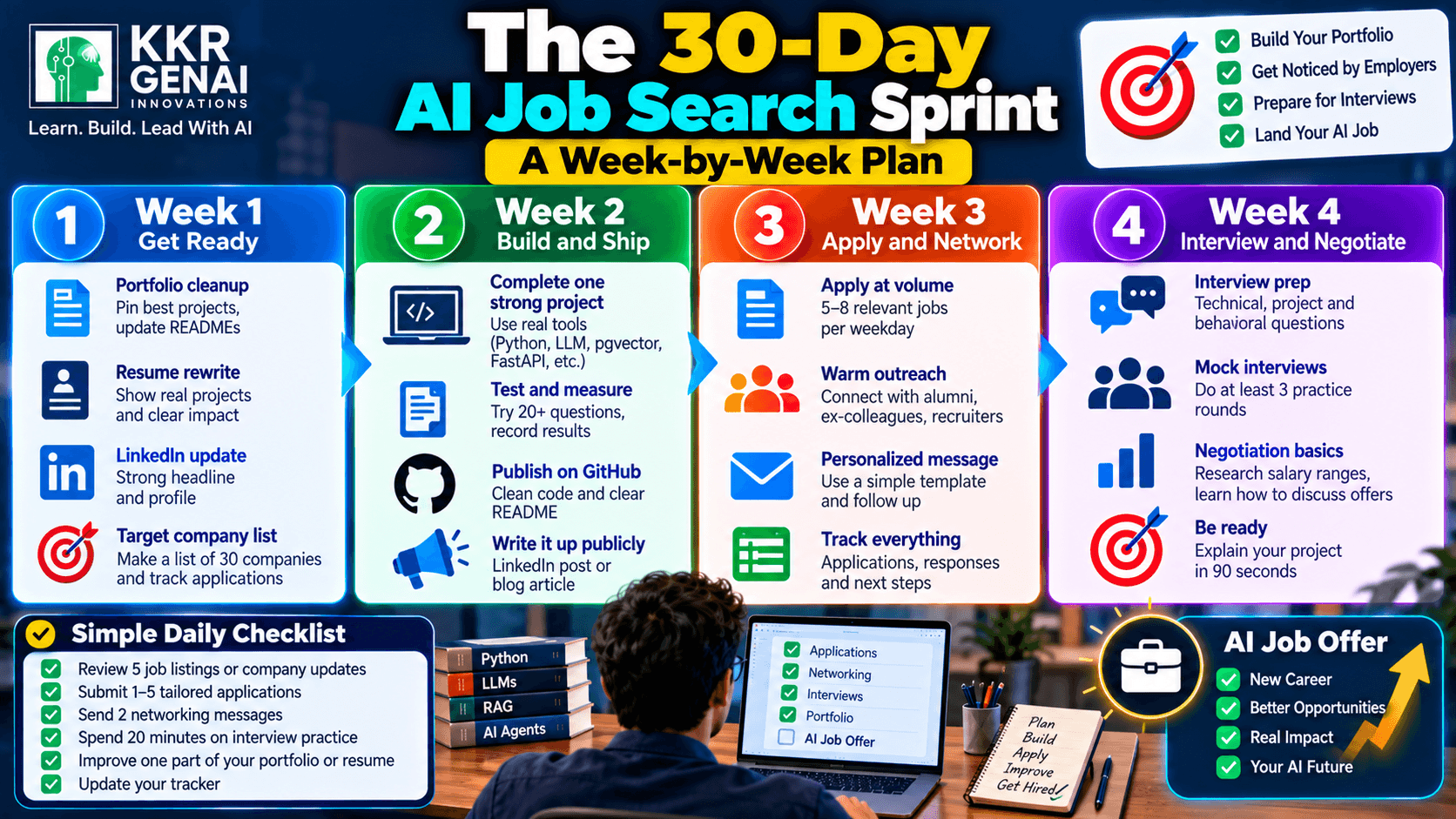
Week 1: Fix Your Resume, Portfolio, and Target List
Before sending applications, make it easy for a recruiter to understand what you can do. Choose one or two target roles, such as AI Engineer, Generative AI Developer, or AI Application Engineer, and study 10 relevant job descriptions on LinkedIn or company career pages.
Look for repeated requirements: Python, REST APIs, large language models (LLMs), retrieval-augmented generation (RAG), vector databases, evaluation, and cloud deployment. Build a short skills checklist from those descriptions, then compare it with your current experience.
Rewrite your resume around evidence, not just technology names. Instead of saying “Knowledge of Python and AI,” describe what you built, which tools you used, and what the result was. For example: “Built a Python-based document Q&A application using an LLM, PostgreSQL with pgvector, and retrieval testing.” Only claim work you actually completed.
Clean up GitHub: pin your strongest repositories, add clear README files, include setup instructions, and remove exposed secrets. Update your LinkedIn headline to reflect your target role and real skills, such as “QA Engineer transitioning to AI Engineering | Python, RAG, LLM Applications.”
Finish the week with a target list of 30 companies. Include their career-page URLs, relevant job titles, application dates, and any contacts you can identify. Divide the list into 10 priority companies and 20 additional targets.
Week 2: Ship One Project Worth Discussing
One finished, well-explained project is more useful than five unfinished tutorials. Choose a problem connected to your previous experience so you can explain why it matters and what a real user would gain from it.
A QA professional could build a bug-report assistant that groups similar issues and retrieves relevant test cases. A data engineer could build a natural-language interface for querying a sample dataset. A support professional could create a documentation assistant that answers questions with citations to its source documents.
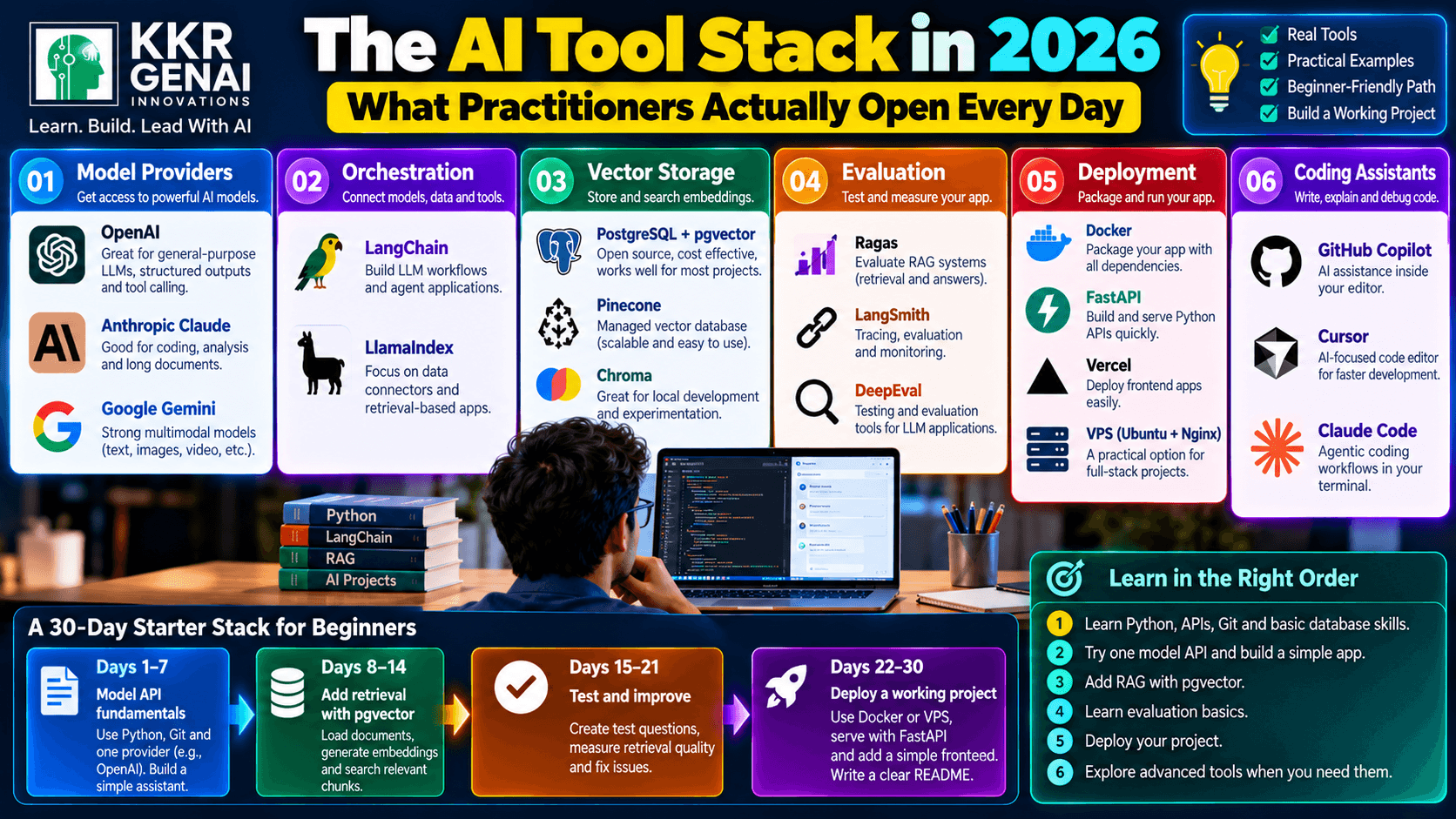
Keep the scope small enough to finish in a week. A practical stack might include Python, FastAPI, an LLM, PostgreSQL with pgvector, and a simple React interface. If you use a hosted model or a local model, document the choice and any limitations.
Test the project with at least 20 representative questions or inputs. Record failures, measure a few meaningful results, and explain what you would improve next. Publish the code on GitHub and write a short LinkedIn post or blog article covering the problem, architecture, evaluation, limitations, and lessons learned.
Week 3: Apply Consistently and Start Conversations
Now turn your preparation into opportunities. Aim for 5–8 relevant applications per weekday, adjusting the target to your available time and the quality of suitable openings. By Friday, you could have 25–40 applications submitted, each tracked in a spreadsheet.
Prioritize roles where you meet most core requirements and can explain how your existing experience transfers. Your background is not wasted: QA experience helps with evaluation, data engineering helps with pipelines, and support experience helps with understanding user problems and troubleshooting systems.
Pair applications with warm outreach. Contact alumni, former colleagues, recruiters, or engineers at your target companies. Personalize the first sentence instead of sending the same generic message to everyone.
Message template:
Hi [Name], I’m a [current role] transitioning into AI engineering, with hands-on work in [relevant skill or project]. I recently built [one-line project description] and noticed your team works on [specific area]. If you’re open to it, I’d appreciate 10 minutes to learn what skills matter most for this type of role. Thanks for your time!
Ask for advice before asking for a referral. Follow up once after about five to seven business days if you receive no reply. Track responses and interviews, not just application counts, so you can improve your approach based on results.
Week 4: Practice Interviews and Learn to Negotiate
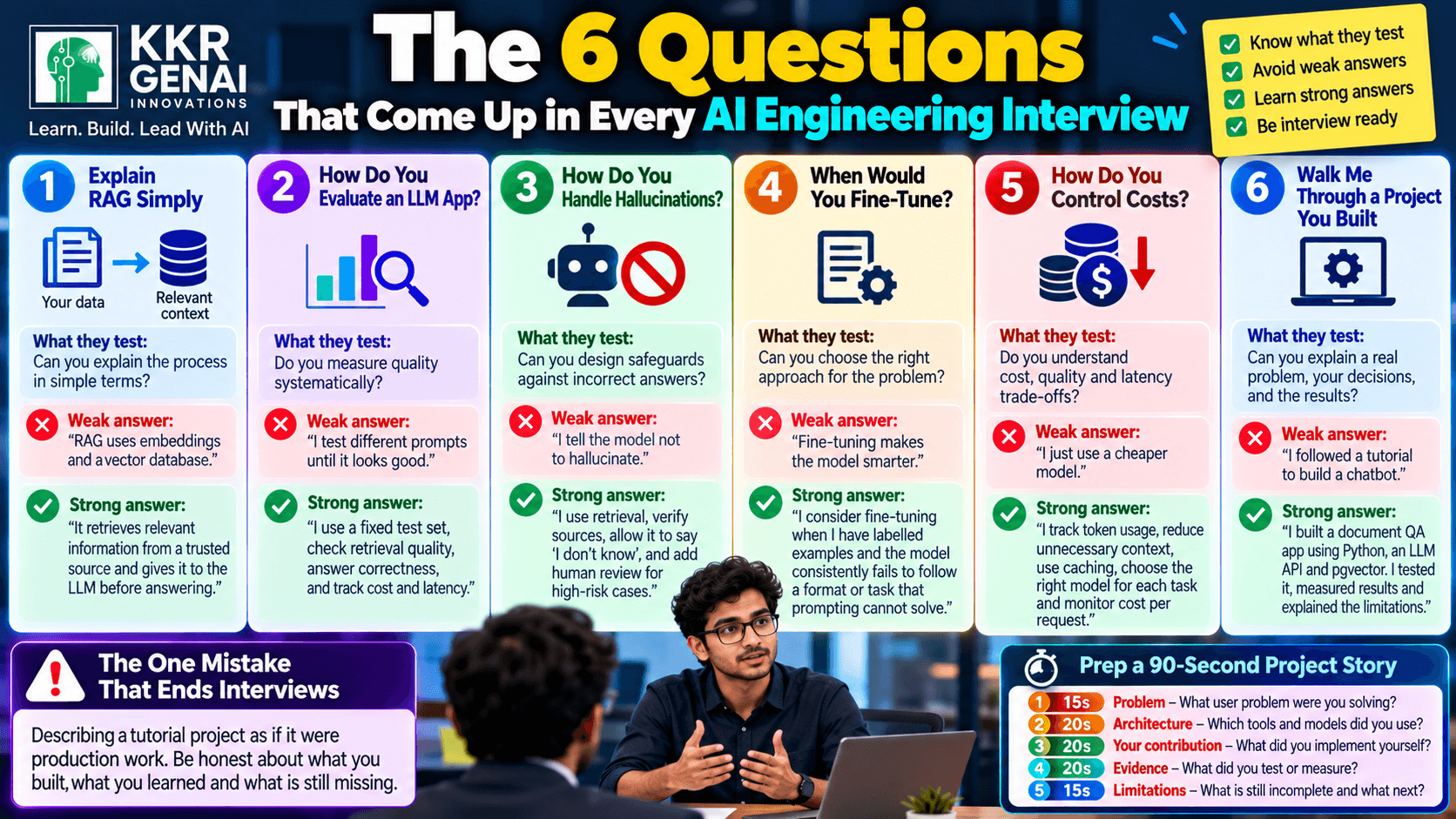
Use the final week to practice explaining your work under pressure. Prepare a 90-second project walkthrough covering the problem, architecture, model choice, evaluation, trade-offs, and what you would change. Be ready to explain why you chose RAG instead of fine-tuning, how you handle hallucinations, and how you would control latency and cost.
Schedule at least three mock interviews with a peer, mentor, or an AI interview practice tool. Practice Python fundamentals, API design, basic SQL, debugging, and system-design questions relevant to the roles you are targeting. After each mock round, write down three weaknesses and practice them again.
Prepare concise stories about your past work using the STAR method: Situation, Task, Action, and Result. For salary discussions, research comparable roles by location, level, and responsibilities using sources such as Levels.fyi, Glassdoor, and current job postings. Consider total compensation, benefits, remote-work expectations, and growth opportunities—not just base salary.
If asked about salary expectations, you can say: “I’m looking for a competitive package aligned with the role’s scope and market range. Could you share the budgeted range for this position?” Avoid accepting an offer before you understand the written terms.
Your Daily Checklist: Keep the Sprint Moving
Consistency matters more than one exhausting weekend. Set aside 60–90 minutes on weekdays if possible, and use a longer weekend session for project work or mock interviews.
- Review five relevant job listings or company updates.
- Submit 1–5 tailored applications, depending on your current week's target.
- Send two personalized networking messages.
- Spend 20 minutes on interview practice or technical revision.
- Improve one small part of your portfolio, project, or resume.
- Update your tracker with applications, replies, and next steps.
On especially busy days, complete a smaller version rather than abandoning the routine. Review your progress every Sunday: which applications led to responses, which skills keep appearing in job descriptions, and what should change next week?
A 30-day sprint cannot guarantee a job offer. It can give you a stronger portfolio, a clearer story, a focused application process, and better interview readiness—assets you can keep building after the month ends.
Are you starting this sprint this month — yes or no?
Join the KKRGENAI community discussion to share your 30-day goal, get feedback, and learn from others making the move into AI.